Reading time: 2 minutes
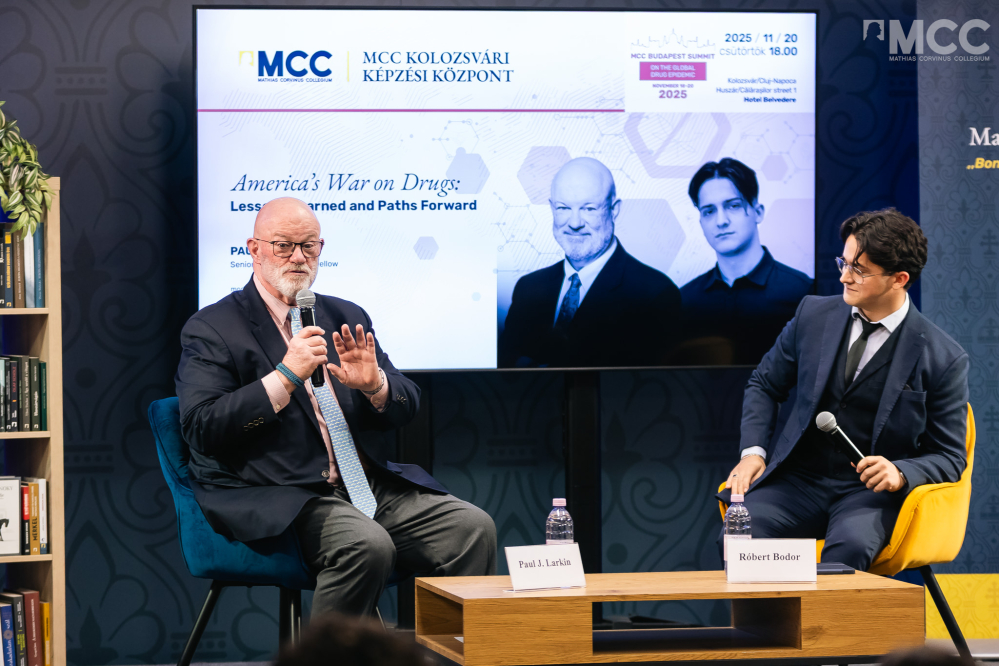
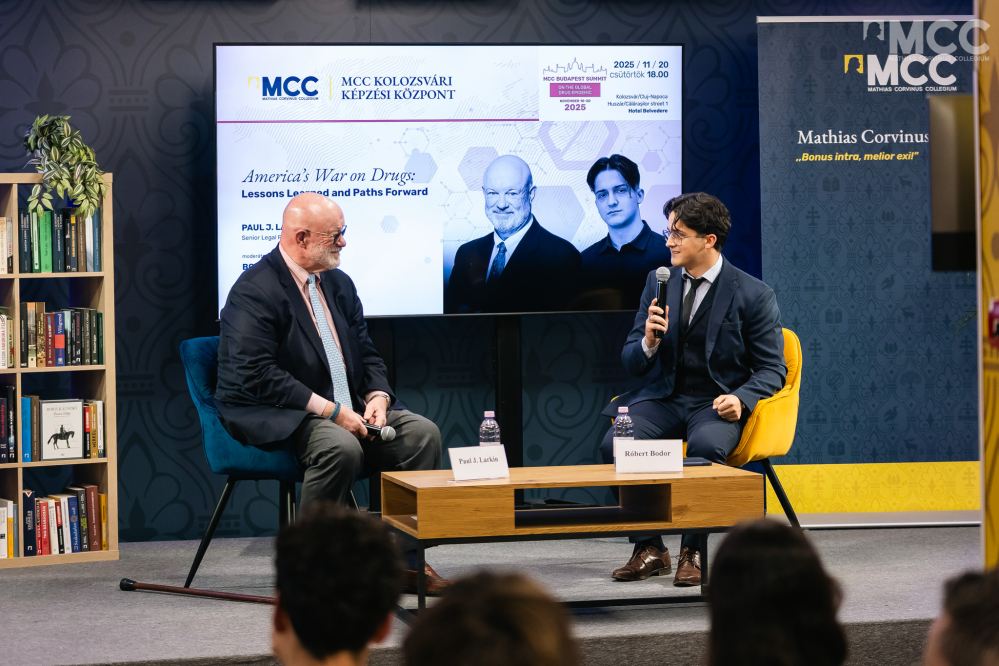
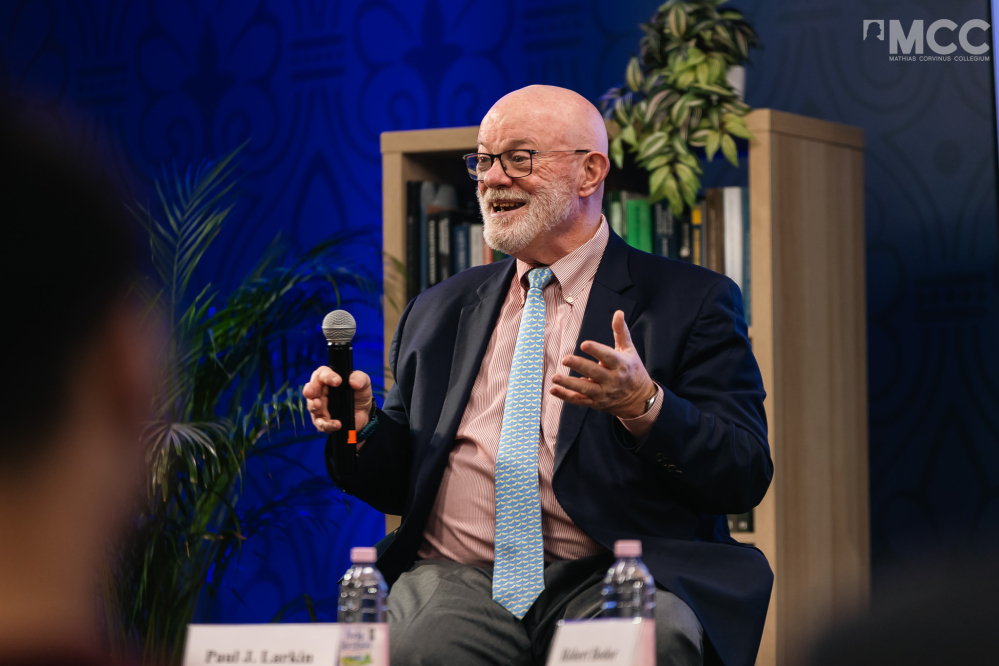
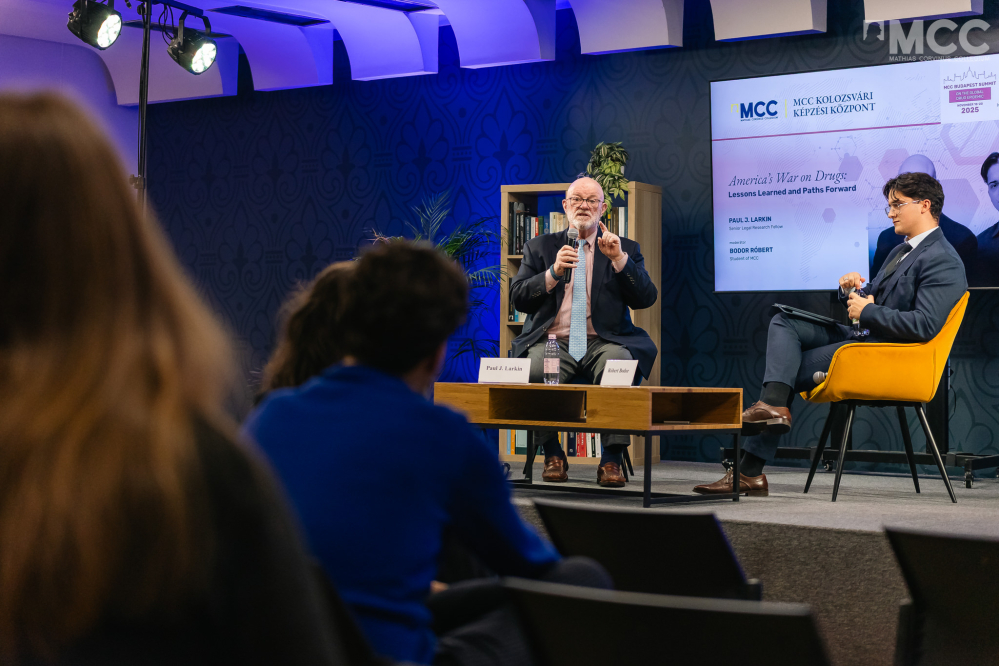
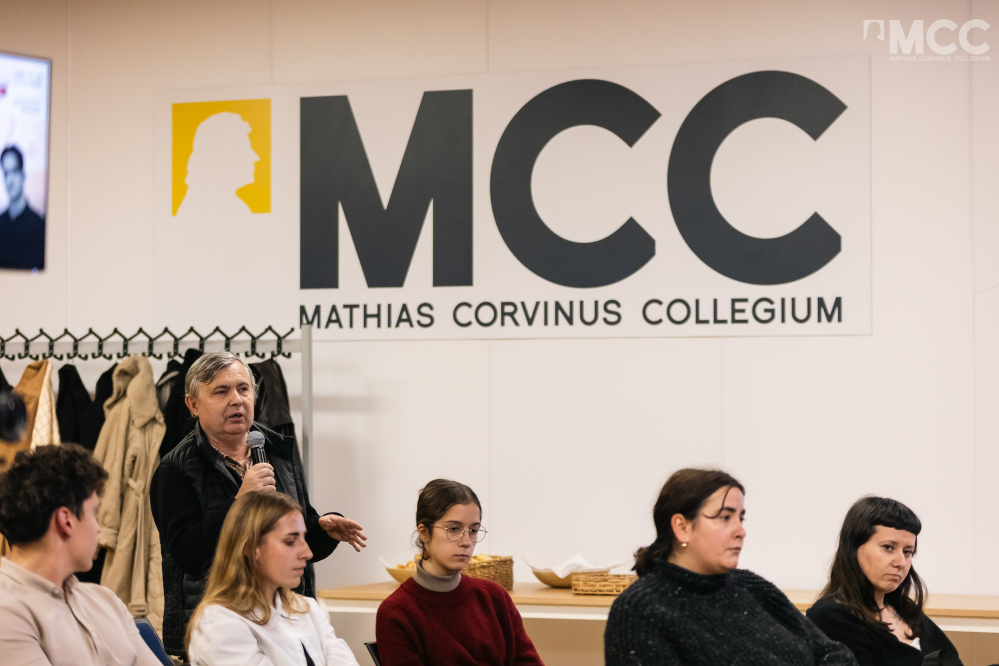
Mathias Corvinus Collegium (MCC) hosted an in-depth discussion on November 20 in Kolozsvár/Cluj as part of the MCC Budapest Summit on the Global Drug Epidemic, examining the past 50 years of America’s drug policies and the rising threats shaping the next decade. The featured guest was Paul J. Larkin, Senior Legal Research Fellow at the Heritage Foundation.
Moderated by Róbert Bodor, law student at Sapientia University and member of the MCC University Program, the event explored the roots and evolution of the U.S. “War on Drugs,” the failures of state-level decriminalization experiments, and the alarming global rise of synthetic narcotics.
Asked about the most pressing threats today, Larkin issued a stark warning: “I believe that the single greatest threat we now face is from what are called novel psychoactive substances.” These entirely synthetic drugs — including methamphetamine, fentanyl, and new ultra-potent compounds such as nitazenes — are manufactured in labs, not grown from plants, making them inexpensive, adaptable, and extraordinarily dangerous.
Fentanyl’s lethality has dramatically reshaped the U.S. drug landscape, it caused between 80,000 and 100,000 overdose deaths annually in recent years. “Fentanyl can kill you in less than a heartbeat,” Larkin stressed. Compounding the problem, chemists can tweak molecular structures faster than laws can adapt, he cautioned.
Despite his background in criminal justice, Larkin emphasized that policing alone cannot solve drug epidemics. “The criminal justice system should be the last resort,” he said. He argued for far greater investment in prevention and addiction treatment, highlighting the success of programs like Hawaii’s HOPE model and South Dakota's 24/7 Sobriety initiative. Both rely on swift, predictable, but modest sanctions combined with intensive monitoring, producing strong results without resorting to lengthy imprisonment.
Looking ahead, Larkin warned that the drug crisis is likely to worsen as chemistry evolves faster than public policy: “My fear is that over the next 10 years, chemists will move us further and further towards oblivion as they make more complex, more powerful, and therefore more dangerous synthetic drugs.” And the United States or the world is not prepared for this.
“We need rapid and complete exchange of information, not just within a country, but across countries.” The speaker emphasized that technological innovation and geopolitical complexity are rapidly reshaping the drug landscape, and only a combination of prevention, treatment, international cooperation, and carefully calibrated law enforcement can meet the scale of the challenge.