Reading time: 5 minutes
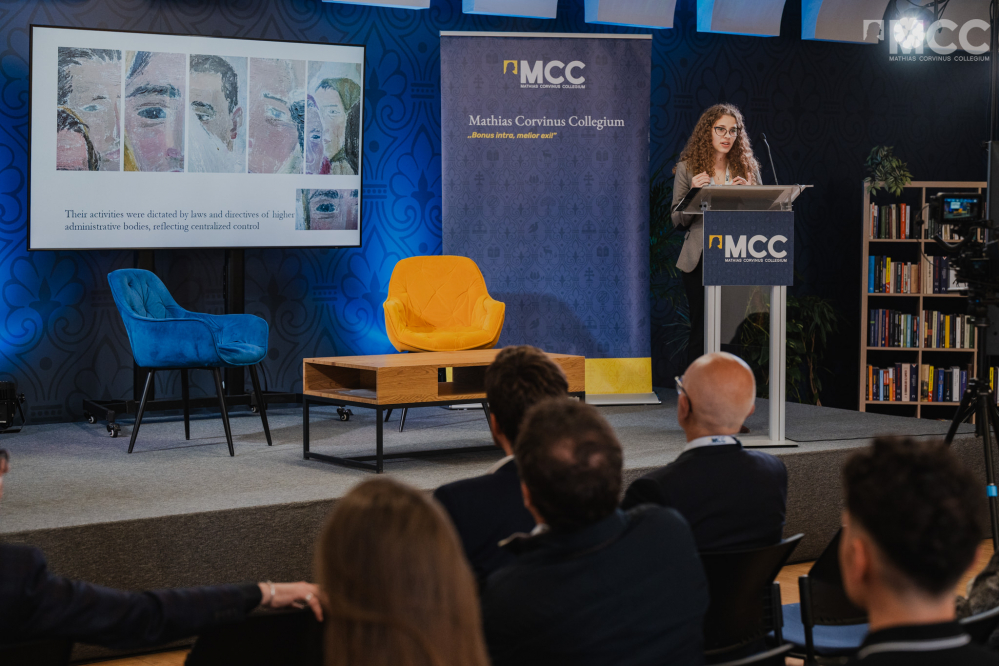
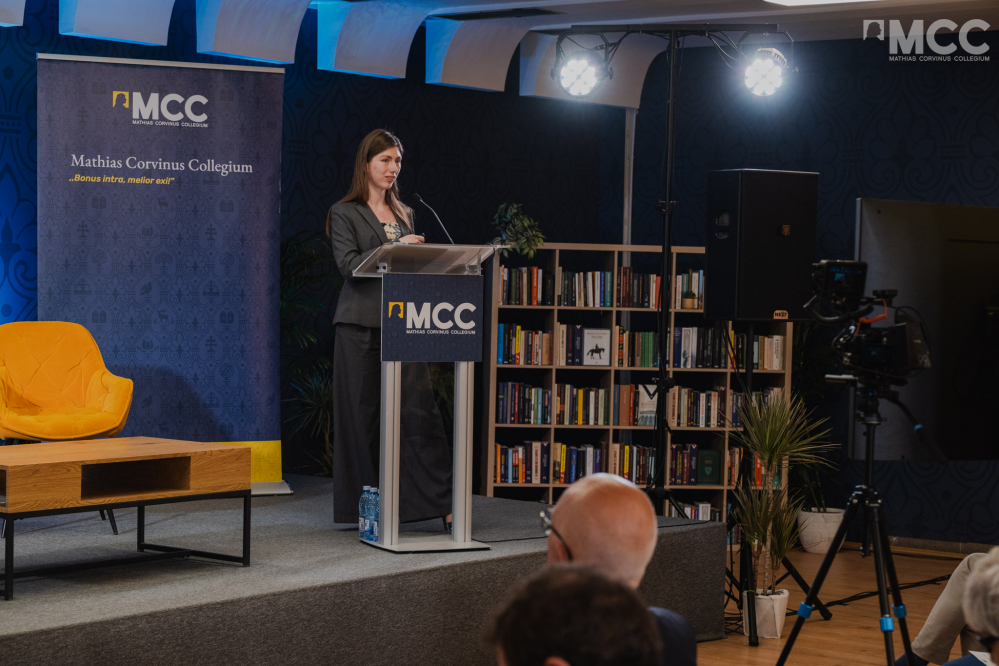
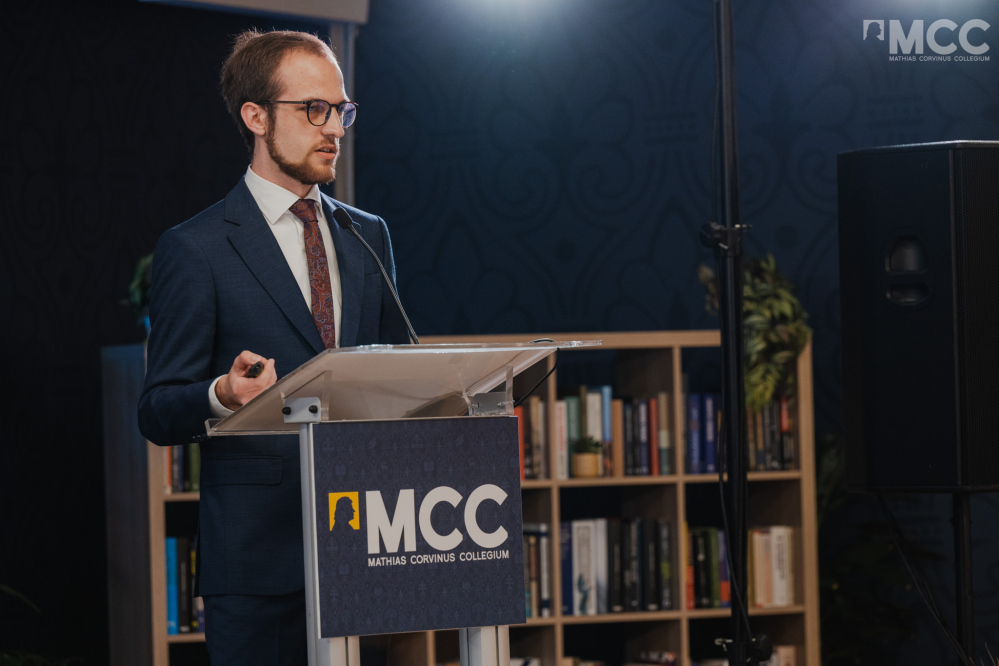
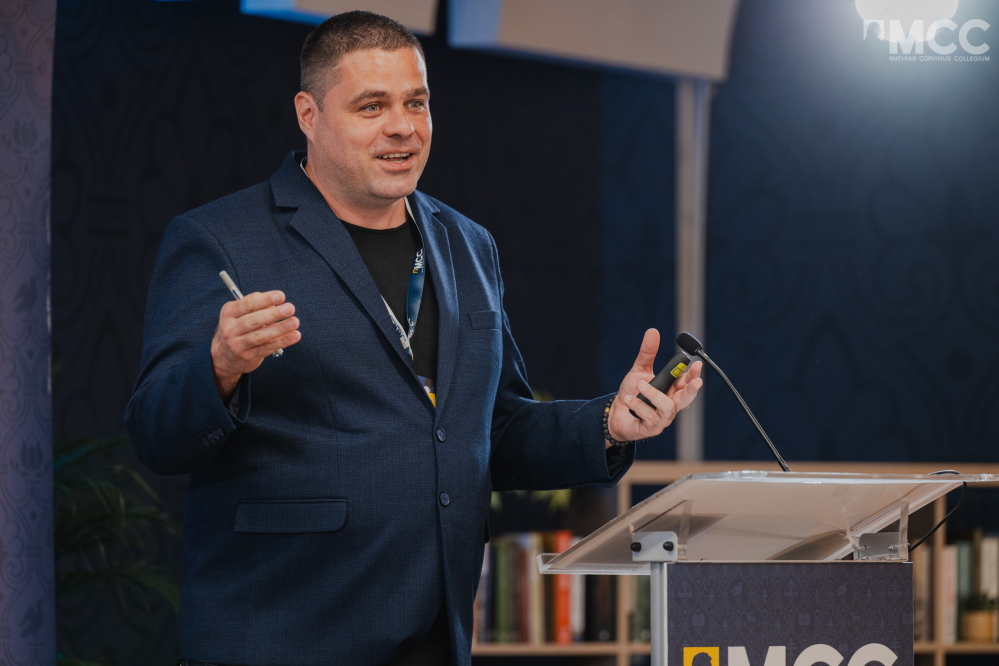
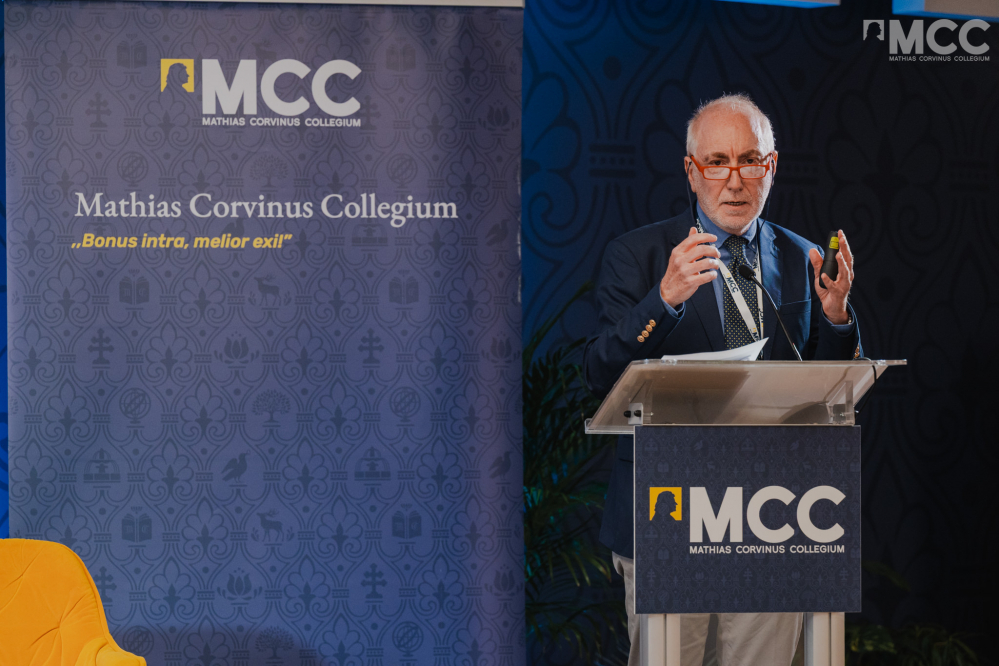
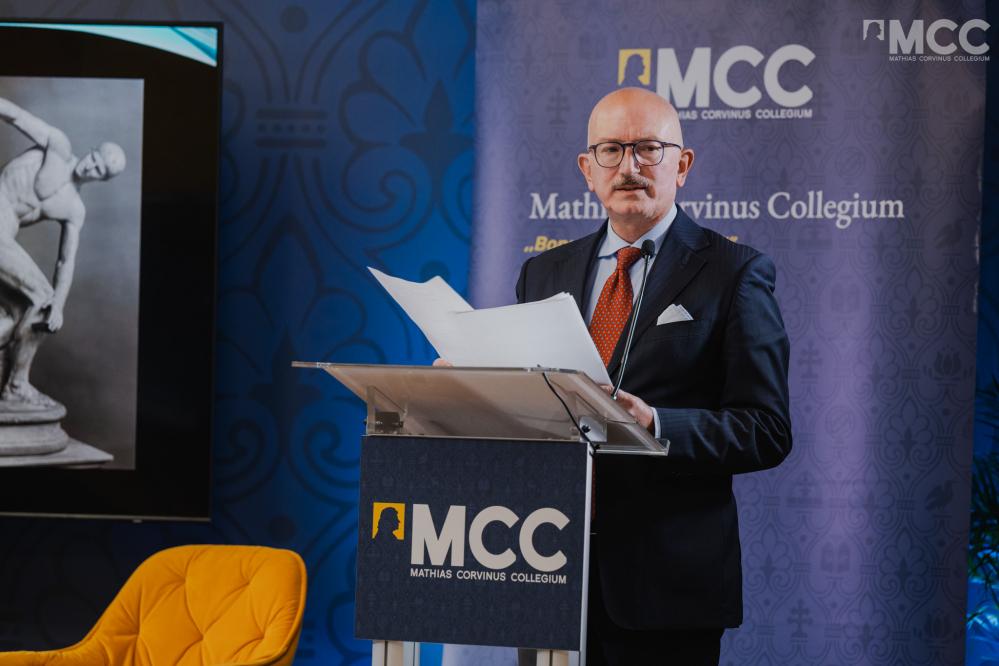
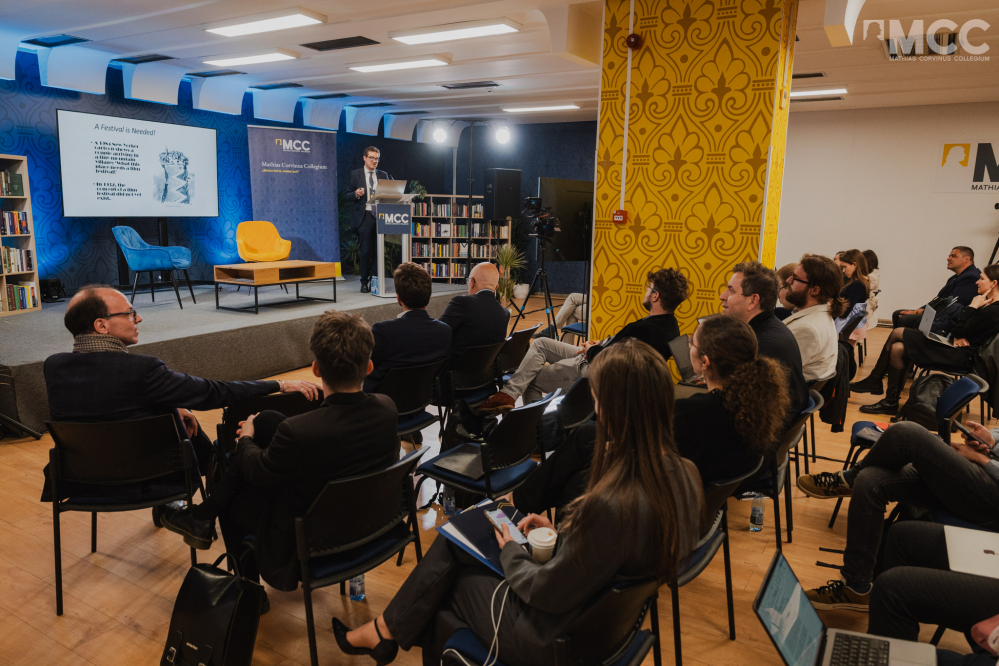
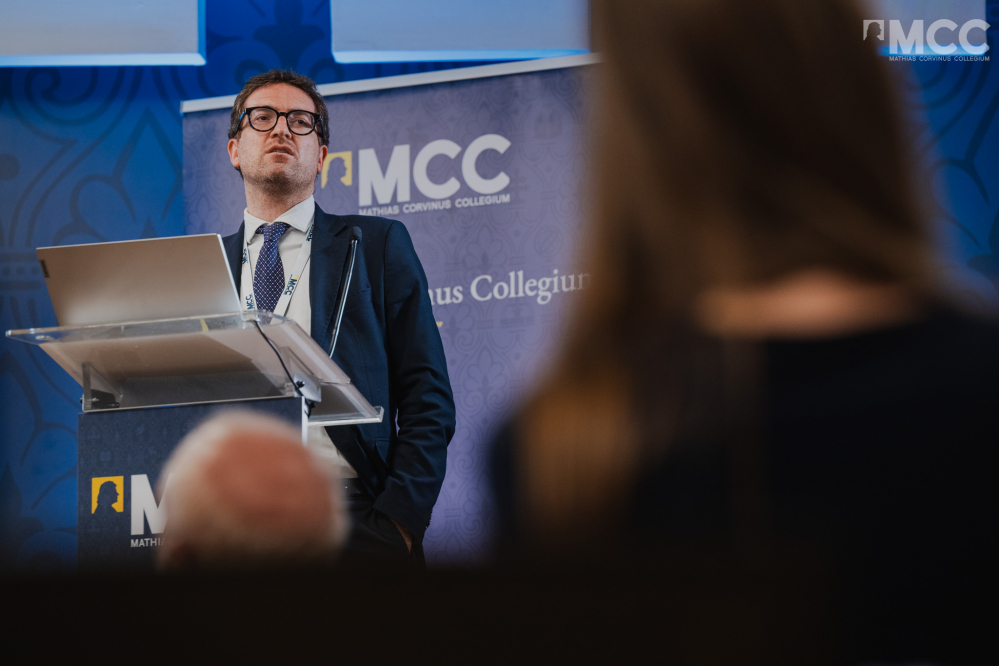
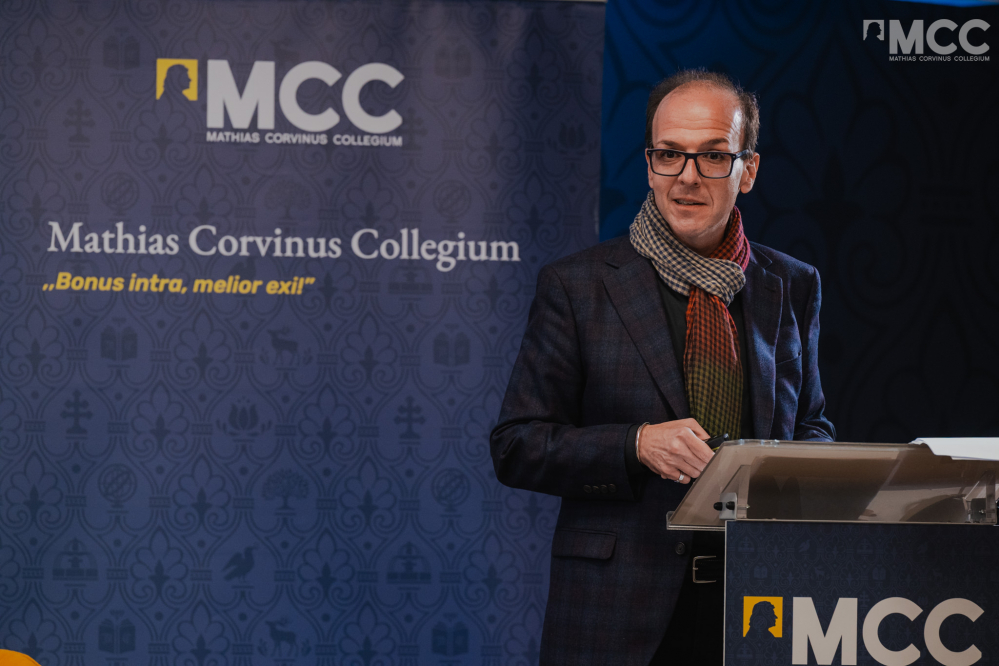
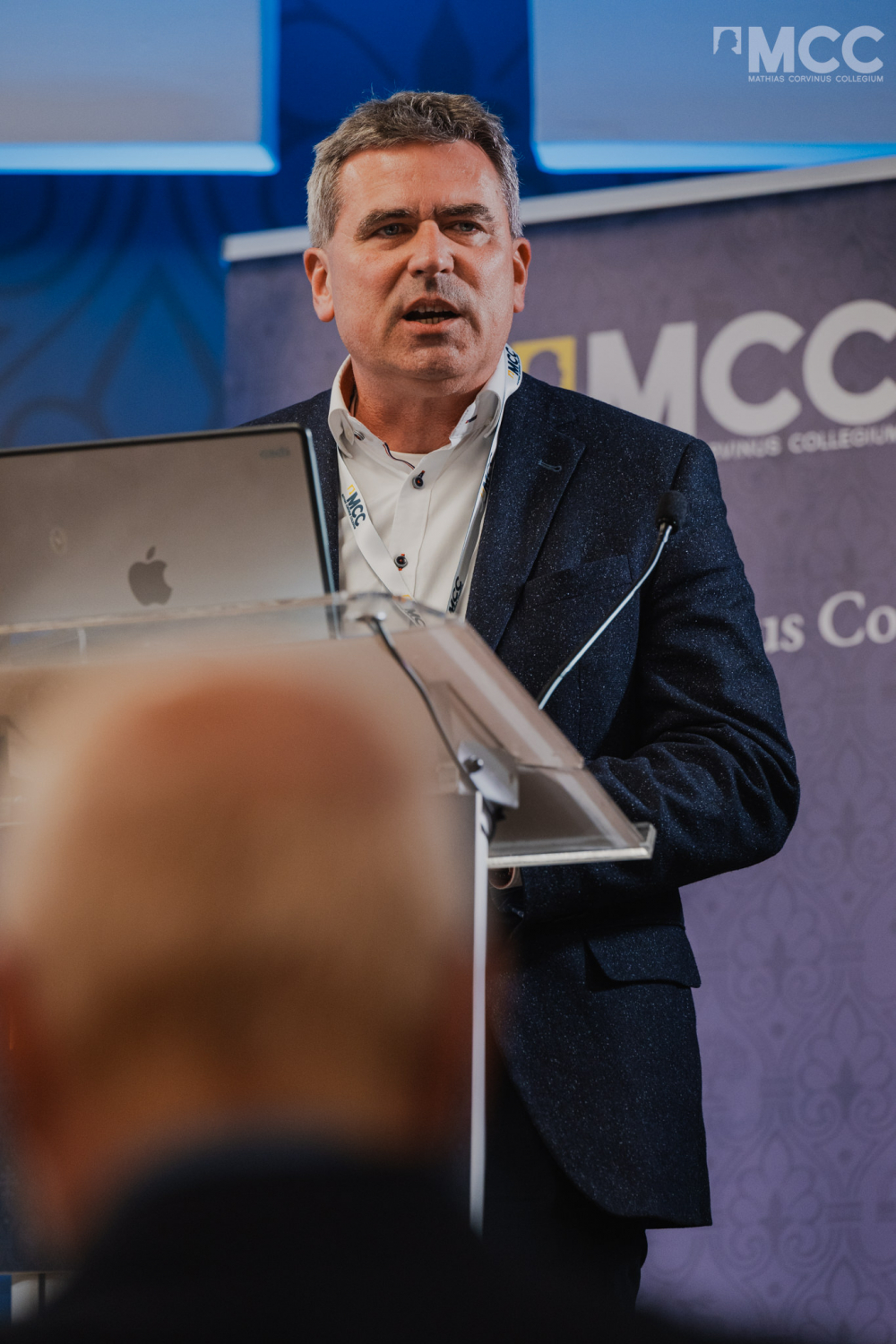
On 29 May, an international group of scholars and law students explored the intricate entanglements between authoritarian power, cultural expression, and legal structures in the 20th century totalitarian regimes. The conference organized by Mathias Corvinus Collegium at Kolozsvár/Cluj-Napoca brought together experts and students from Italy, Hungary, and Romania.
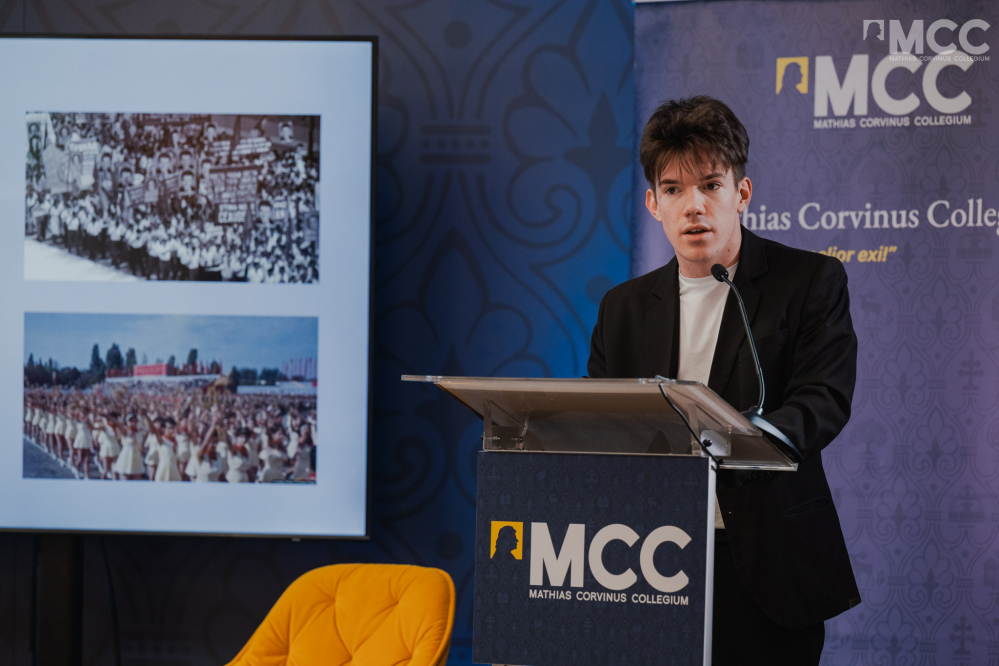
Students of the MCC University Program explored the topic throughout the academic year and presented their research as the culmination of the course at the “Law, Arts and Propaganda in the 20th Century Totalitarian Regimes” conference. Together with the invited experts, they examined how totalitarian regimes instrumentalized art and law to consolidate power, enforce ideology, and silence dissent—while also revealing the subtle and overt acts of resistance that emerged in such repressive environments. The event offered a rich, interdisciplinary dialogue, drawing on historical examples from different parts of Europe.
A recurring theme was the role of architecture in shaping public consciousness under fascist rule. The case of Mussolini’s Italy stood out, where monumental architectural projects transcended aesthetics to become vehicles of ideological communication. The built environment was curated as a demonstration of control, permanence, and power. Fascist and Nazi leaders alike sought to reshape cityscapes in their image, with wide avenues and imposing facades choreographing how citizens moved through and experienced public space. These structures were not only functional, but symbolic—physical manifestations of discipline and submission to state authority. A strong example of this is the construction of the Romanian Parliament, or the "House of the People," which exemplified the regime’s unchecked power.
The conference also highlighted cinema as a powerful medium of state propaganda. Participants revisited the origins of the Venice Film Festival, founded in 1932 during Mussolini’s regime, as a deliberate cultural initiative to project fascist ideals. Through censorship, financial control, and content curation, the film industry was molded into an apparatus of persuasion. Films celebrated the state’s virtues while subtly or overtly embedding political messages. This analysis raised important questions about the responsibilities of cultural institutions and the thin line between celebration and indoctrination.
Another focal point was the Nazi regime’s manipulation of classical art to support its racial narrative. A striking example discussed was the Lancellotti Discobolus, a revered ancient Greek statue depicting the idealized male athlete. Originally taken from Italy to Germany and later returned, the statue had been co-opted by Nazi leaders as a representation of Aryan racial purity. In stripping the artwork of its historical context and reinterpreting it through the lens of ideology, the regime illustrated how cultural heritage could be distorted to legitimize contemporary political objectives.
Despite the authoritarian grip on cultural expression, the conference underscored that resistance endured. Street art—often ephemeral, anonymous, and subversive—emerged as a poignant form of defiance. Even under intense surveillance, artists carved out spaces of opposition in alleyways, abandoned walls, and hidden corners of cities. These unsanctioned expressions stood in stark contrast to the state’s polished propaganda, embodying the spirit of dissent and the resilience of popular creativity.
Opera, particularly under the Nazi regime, was explored as another instrument of ideological dissemination. The state elevated certain composers and performers as embodiments of its vision, while condemning others as “degenerate.” Opera houses became stages not only for artistic performance but also for political theatre—grand spectacles designed to reinforce cultural supremacy and ideological conformity. Music became both a symbol and a tool of control.
Importantly, the conference also examined how legal systems—typically viewed as neutral and just—were harnessed to entrench authoritarian rule. Law under totalitarian regimes became a weapon for criminalizing dissent, institutionalizing propaganda, and solidifying personality cults. Far from being passive instruments, legal frameworks were actively reshaped to ensure the legal impossibility of opposition, cloaking repression in a veneer of legality.
The event brought together scholars from Italy, Hungary, and Romania, serving as a timely reflection on the fragile boundaries between cultural expression and state power.
Participants and topics:
Students:
- Róbert Bodor (Mathias Corvinus Collegium and Sapientia University, Department of Law, Kolozsvár/Cluj-Napoca): Under the Regime’s Gaze: Totalitarianism and Labor Camp Realities
- Sarolta Gál (Mathias Corvinus Collegium and Babeș-Bolyai University, Faculty of Law, Kolozsvár/Cluj-Napoca): The Aryans
- Zsófia Erzsébet Szabó (Sapientia University, Department of Law, Kolozsvár/Cluj-Napoca): Political Rights During Soviet-type Regimes in Relation to Albert Nagy's Painting “The Voting”
- Beáta Iszlai (Mathias Corvinus Collegium and Babeș-Bolyai University, Faculty of Law, Kolozsvár/Cluj-Napoca): The Crowd: The Headless and the Beheaded
- Balázs Szőke (Babeș-Bolyai University, Faculty of Law, Kolozsvár/Cluj-Napoca): Unborn Histories, Unseen Wounds – Depiction of Women in the Light of Decree 770 in Wanda Mihuleac’s Art
- Kincső Szabó (Babeș-Bolyai University, Faculty of Law, Kolozsvár/Cluj-Napoca): Expropriation and Monument Protection in the Communist Romania – The Sacrifices Made to Build the People’s Palace
- Dániel Bartha (Mathias Corvinus Collegium and Babeș-Bolyai University, Faculty of Law, Kolozsvár/Cluj-Napoca): The Ceaușescu Trial – Does the End Justify the Means?
Experts:
- Prof. Dr. Emőd Veress (Sapientia University and MCC, Kolozsvár/Cluj-Napoca): Law, Art and Totalitarian Dictatorship In 10 Artworks
- Prof. Dr. Luigi Lacchè (University of Macerata and LUISS University in Rome): Architecture, Visual Arts, Justice: The Fascist Regime
- Prof. Dr. Giacomo Pace Gravina (University of Messina): The Lancellotti Discobolus Case
- Dr. Mario Riberi (University of Turin): The Venice Film Festival and Fascism (1932–1942)
- Prof. Dr. Tamás Nótári (Sapientia University, Kolozsvár/Cluj-Napoca): “Es wird einmal ein Wunder gescheh’n...” Zarah Leander – Collaborator? Political Idiot? Scapegoat?
- Prof. Dr. Attila Menyhárd (MCC Budapest): Totalitarian State, Totalitarian Society and Street Art