Reading time: 3 minutes
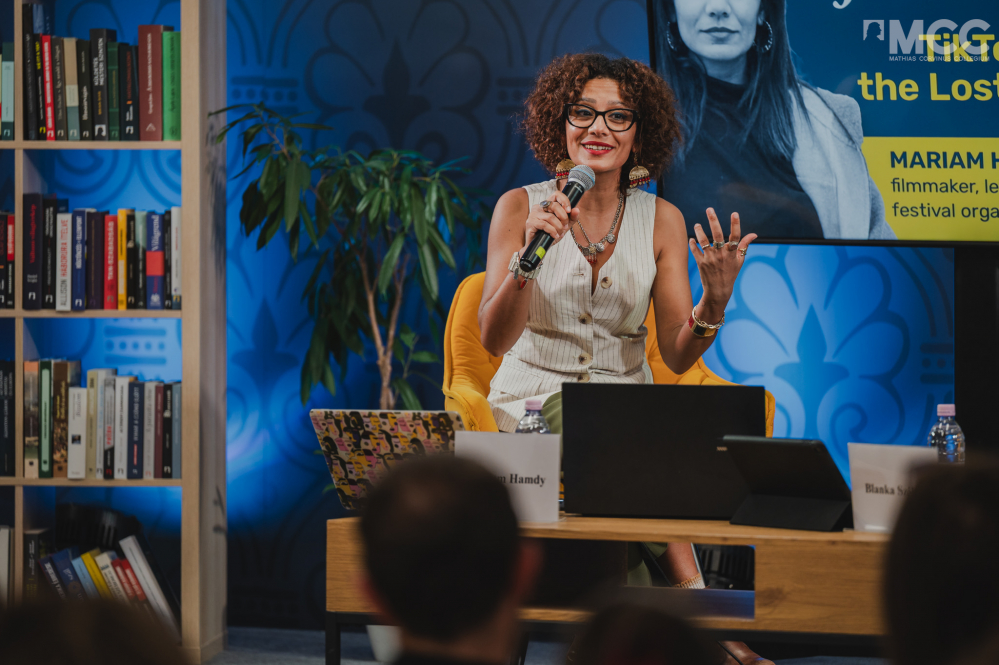
How does short-form content affect storytelling? Platforms like YouTube, Instagram, and TikTok all favor shorter videos—but what does this mean for storytelling as a genre? These and similar questions were explored at the April 16 edition of Transylvania Lectures, organized by Mathias Corvinus Collegium (MCC) in Kolozsvár/Cluj-Napoca.
The event’s guest was Mariam Hamdy, an independent filmmaker, lecturer, film programmer, and festival organizer, of Egyptian origin. Currently a lecturer at Babeș-Bolyai University, she previously taught at the American University in Cairo and has worked as an independent filmmaker and voice artist with platforms like Netflix, DreamWorks, and Disney+. She was joined in conversation by Székely Blanka, a television journalist and member of MCC’s international relations team.
The lecture contrasted storytelling through short-form videos with that of short films and feature-length cinema. While both formats have their merits, they serve different purposes. But what do we really mean by storytelling? Where does it come from, and what is its purpose? Since the dawn of humanity, people have documented their experiences—first with cave paintings, then books, theater, film, and now social media.
Today, social media platforms prioritize short videos because they generate the most views and keep users engaged for longer. So why are we drawn to this format? It’s accessible to everyone, bridges generational gaps, delivers lots of information quickly, and offers entertainment. Through trends, it can even give us a sense of belonging. Yet each of these advantages has its downside. The brevity may be convenient—but it can lead to superficiality: shallow information, fleeting emotions, and limited personal impact.
Mariam Hamdy highlighted the negative effects of consuming short content. The more fast-paced videos we watch, the shorter our attention span becomes—we lose the ability to wait, to be patient. The constant dopamine stimulation desensitizes our brains, leading to apathy and even signs of addiction (“just one more video”). This vicious cycle not only harms our mental health but also alters how we relate to long-form creations—books, films—and what we expect from them.
“This effect is already visible in the next generation of filmmakers,” Hamdy said, noting changes in her students’ projects. Many young people seem to confuse short films with social media clips. A reel on Instagram typically captures an aesthetic moment, paired with trendy music, quick edits, and warm colors. But can it truly move us—or just leave us with a pleasant feeling? According to Hamdy, short films must rely on emotion, stakes, and character development: “We need to tell a full story, not just create a vibe,” she emphasized.
Films are meant to evoke emotion—whether experienced alone or shared across cultures, even globally. Hamdy expressed hope that young creators will once again center their work around stories and bring back its deeper meaning. She would prefer to hear the phrase, “I have an idea for a film!” more often than “I have a TikTok idea!” Székely Blanka also spoke about the lack of catharsis in short-form videos—the emotional release that follows a story’s climax, common in films and theater alike.
The conversation also addressed making storytelling and filmmaking more accessible to everyone. In Egypt, Hamdy noticed that those living in the capital had an advantage in all areas, including filmmaking. To address this imbalance, she initiated several projects, including the Silverscreen Film School, which connects Egyptian and Romanian talents and encourages cultural and artistic collaboration. She also helped found the Pasaje Film Festival in Beszterce/Bistrița, which aims to bring creative works to smaller Romanian towns like Zilah/Zalău, Sepsiszentgyörgy/Sfântu Gheorghe, and Beszterce/Bistrița.